

Cabinets make a massive difference to the look of your kitchen. So too, is the material they’re made of. It affects everything from appearance and durability to cost and maintenance.
So, what are kitchen cabinets made of? And why is it so important? Because the materials you choose impact the appearance of the room, as well as your pocket.
Kitchen Cabinets: What are they Made of?
Need new cabinets but don’t know where to start? Designing a new kitchen? Confused by the choice of materials that kitchen cabinets are made of?
Kitchen cabinets come in a wide range of materials, each with their pros and cons. From chipboard to laminate, we review the different types of kitchen cabinets on the market to help you pick the perfect one for your home.
1. Chipboard
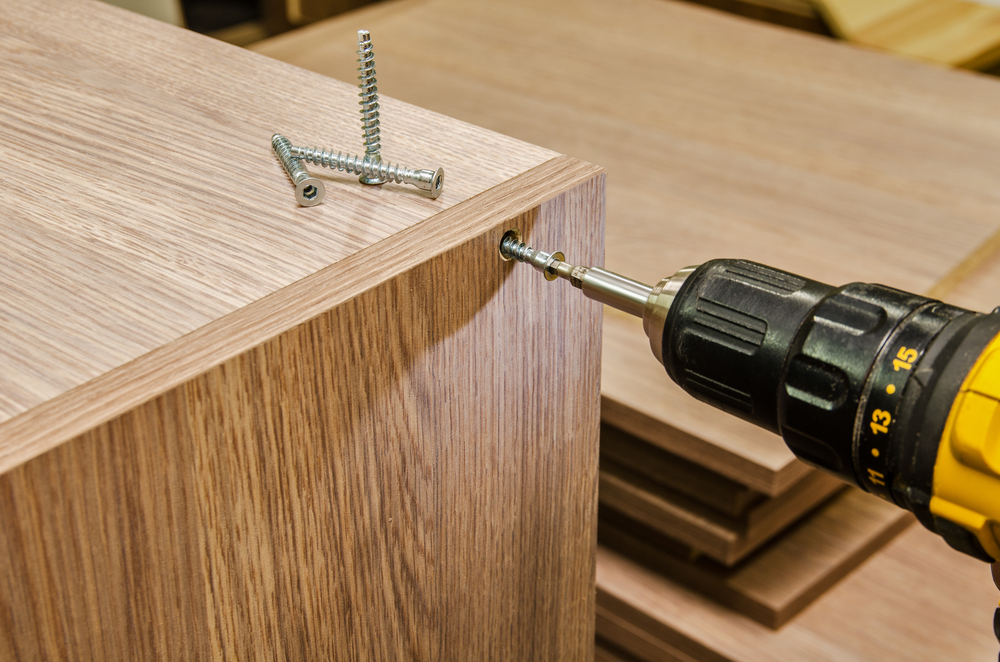
Chipboard is the king of kitchen cabinet materials. Most kitchen cabinets are made from it, though the doors can be made from different materials. But chipboard is such a common, cost-effective material option that we’re giving it its own expanded section below.
Also known as particle board, chipboard panels are manufactured from wood chips and sawdust that are glued together and compressed before melamine is applied. You’ll find chipboard cabinets in a variety of kitchen designs including modern kitchens and shaker kitchens.
Advantages
As chipboard is such a popular material for kitchen cabinets, we’re going to list all the benefits one by one.
Lightweight: Chipboard is significantly lighter than other cabinet materials, making it easy to transport and handle.
Durable: Melamine Faced Chipboard (MFC) has a thin, protective layer on the surface that’s water resistant, easy to wipe clean, and long-lasting. But chipboard can be prone to water damage when liquid reaches the unprotected edges of the cabinet. While some products come with finished edges, others don’t so be aware.
Design flexibility: The surface of chipboard supports a myriad of design and colour opportunities. Whether it’s printed patterns or cabinets for sage green kitchens, you’ll find an almost endless selection to choose from.
Low cost: MFC panels are typically cheaper to manufacture than panels made from timber and other materials. This makes them a cost-effective solution for all kinds of kitchen set-ups from modern sage green kitchens to bespoke kitchens.
Disadvantages
Despite their many benefits, there are also downsides to using chipboard for your kitchen cabinet design.
Limited durability: Chipboard can be less durable and strong than other materials like solid wood. This makes them more susceptible to dents, scratches and general wear and tear, and they may need replacing more often than other materials.
Moisture Sensitivity: Chipboard can be prone to water damage. When liquid reaches the unprotected edges, they can cause the panel to swell, warp and disintegrate, making them unsuitable for some outdoor settings and areas with high humidity. While some products come with finished edges, others don’t so be aware.
Maintenance: Unlike solid wood, chipboard can be difficult to repair. Damage such as chipped edges or dents can be tough to fix, and panels may tend to split when subjected to force.
2. Plywood
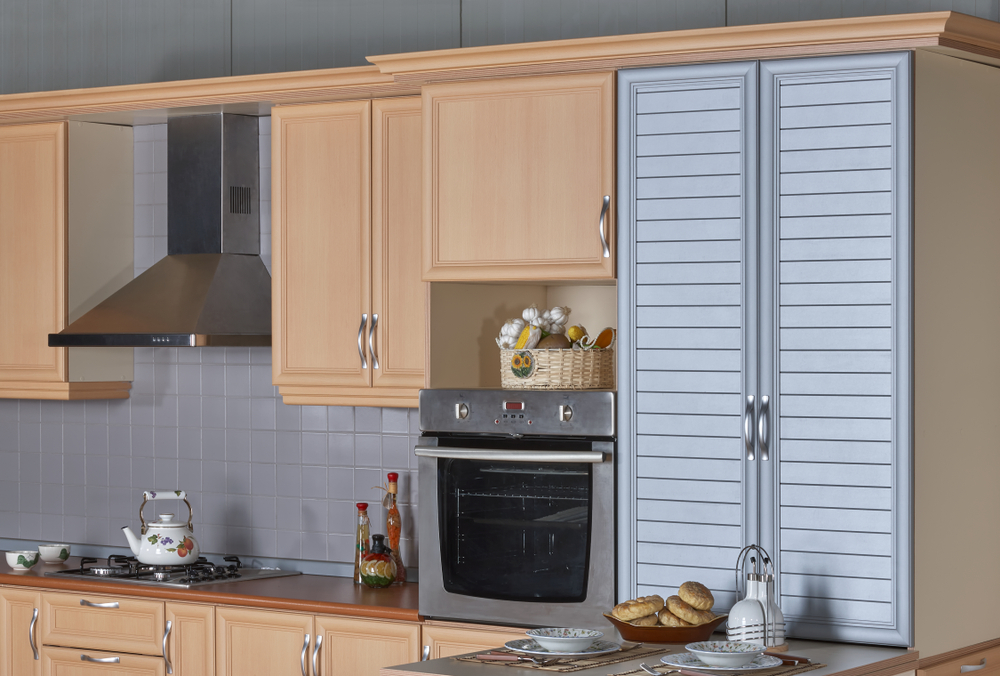
Plywood is another popular and budget-friendly material for kitchen cabinets. Thin layers of wood are glued and laminated, and a veneer is applied. Plywood is graded from AA to E, based on quality and strength.
| Advantages | Disadvantages |
| Strength: Impressive weight to strength ratio. | Breakable: Thin plywood can snap when not applied properly. It is not as durable as hardwood. |
| Lightweight: Weighs less than hardwood and other materials, making it easy to transport and handle. | Longevity: Veneer finishes can chip or peel over time and may need repairing. |
| Maintenance: Easy to repair chips by sanding down or applying wood filler. | Knots: Gaps and knots can appear in plywood, making it tricky to maintain. |
3. MDF
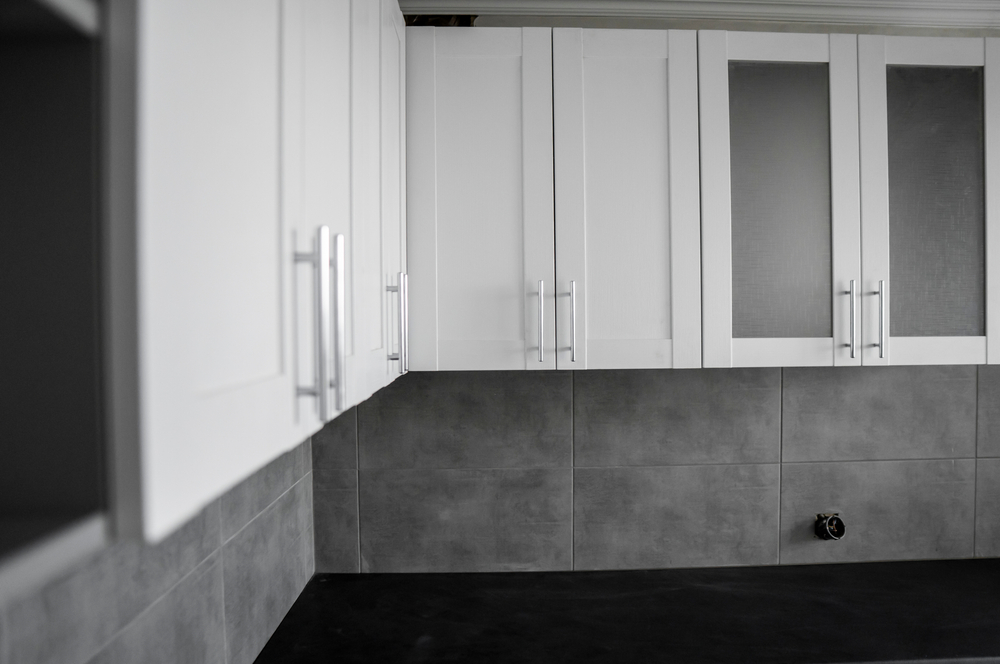
Medium Density Fibreboard, or MDF, is an engineered wood used to make all kinds of furniture and products. Hardwood or softwood particles are blended with wax and resin and then compressed to form a hard panel. Whether it’s grey kitchen units or a pattern of your choice, MDF cabinets with their laminated surfaces come in a wide range of colours and designs, and can easily be painted over.
| Advantages | Disadvantages |
| Hard-wearing: MDF is dense, strong and smooth, providing years of reliability. | Sagging: MDF panels can sag over time when kitchen cabinets are overloaded. |
| Warp resistant: Wax and resin provide impressive water and warping resistance. | Temperatures: MDF isn’t suitable for hot environments with extreme heat. |
| Flexibility: Easier to manufacture large panels than hardwood, making it ideal for big kitchen projects. | Stronger alternatives: MDF is hard wearing, but it isn’t as strong as full natural wood panels or stainless steel. |
| Easy to decorate: Unlaminated MDF is great for painting any colour of your choice. |
4. Hardwood or Solid Wood
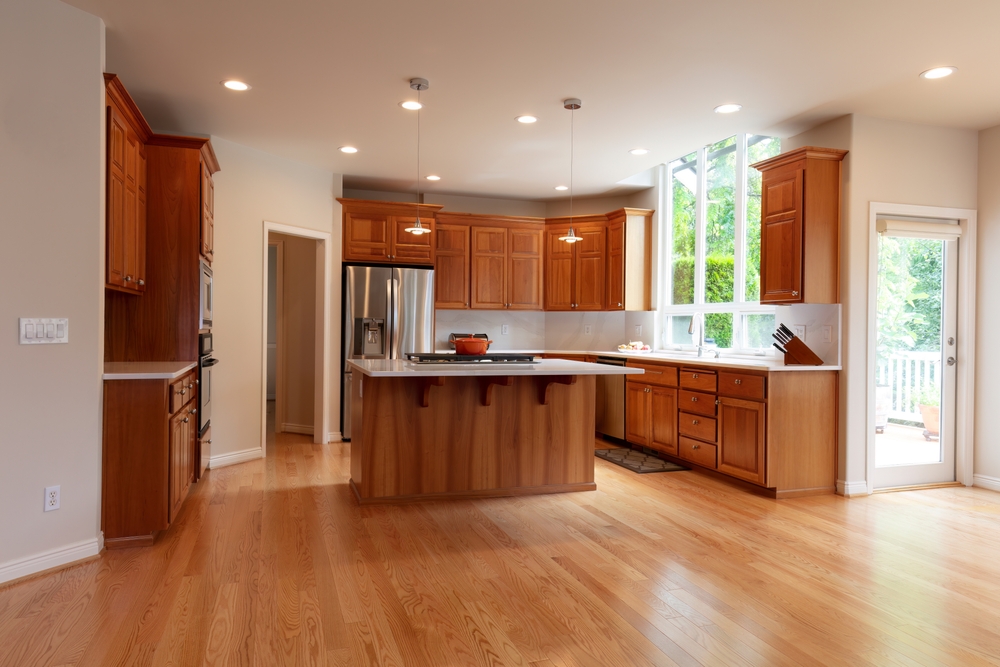
Hardwood or solid wood cabinets are particularly popular with traditional kitchen designs, providing unique natural beauty and incredible strength. Whether you choose oak, ash, cherry or other types of natural wood, no two panels are the same, offering bags of organic character.
| Advantages | Disadvantages |
| Extreme strength: Hardwoods have been to make everything from ships to buildings for centuries and can withstand heavy use. | Cost: Natural wood is typically more expensive than manufactured products like MDF. |
| Sustainability: Wood is popular with eco-friendly kitchen designs and is more sustainable than manufactured materials. It is also non-toxic. | Weight: Hardwood and solid wood are dense and heavy, making them awkward to handle and fix in place. |
| Colour and stains: Natural wood comes in a variety of stains and finishes to suit your design preference. You can also paint natural wood without damaging its integrity. | Inconsistencies: Some softer woods like pine are not as durable as other varieties such as oak. |
| Warping: Moisture exposure may cause some natural wood products to warp over time if not treated properly with the right varnishes and protective coatings. |
5. Stainless Steel
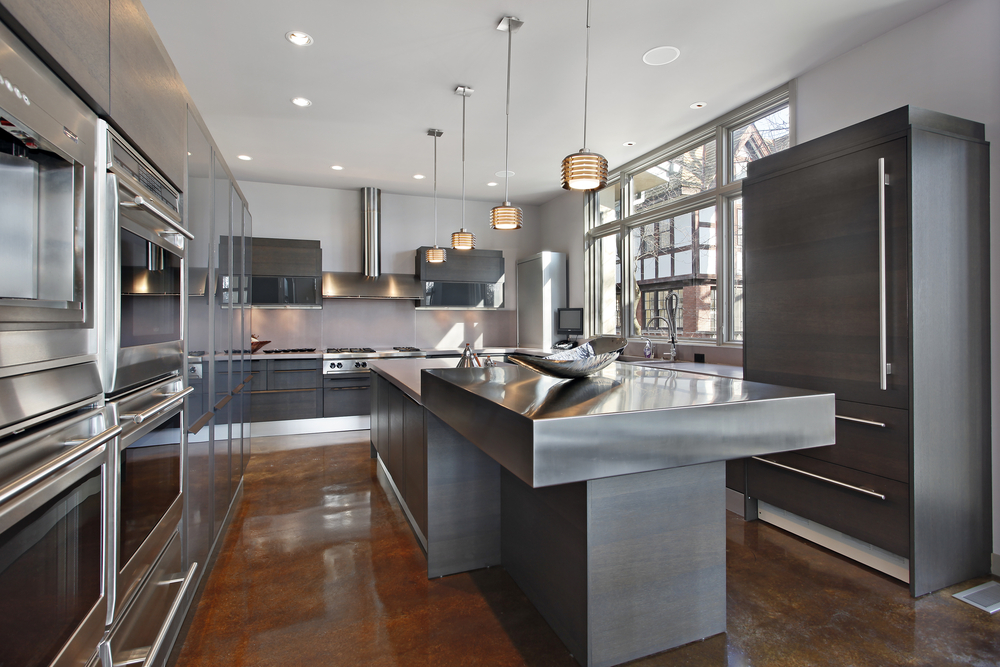
Stainless steel kitchen cabinets are a great option for those seeking a sleek, industrial look. With their smooth, clean surfaces and shiny surfaces, they’re proving popular in both commercial and domestic settings.
| Advantages | Disadvantages |
| Long-lasting: Stainless steel has superb fire and water resistance qualities and will last for many, many years. | Damage prone: The smooth surface of stainless steel can pick up dents, scratches and marks that are difficult to repair. |
| Reliability: Steel won’t warp when exposed to moisture or heat, whereas natural wood will. | Design limitations: Stainless steel cabinets can look out of place in certain kitchens and can be difficult to pair with some design themes. |
| Easy to clean: Regular wiping with a cloth and detergent will remove surface dirt and keep your stainless steel cabinets in pristine condition. |
6. Wood Veneer
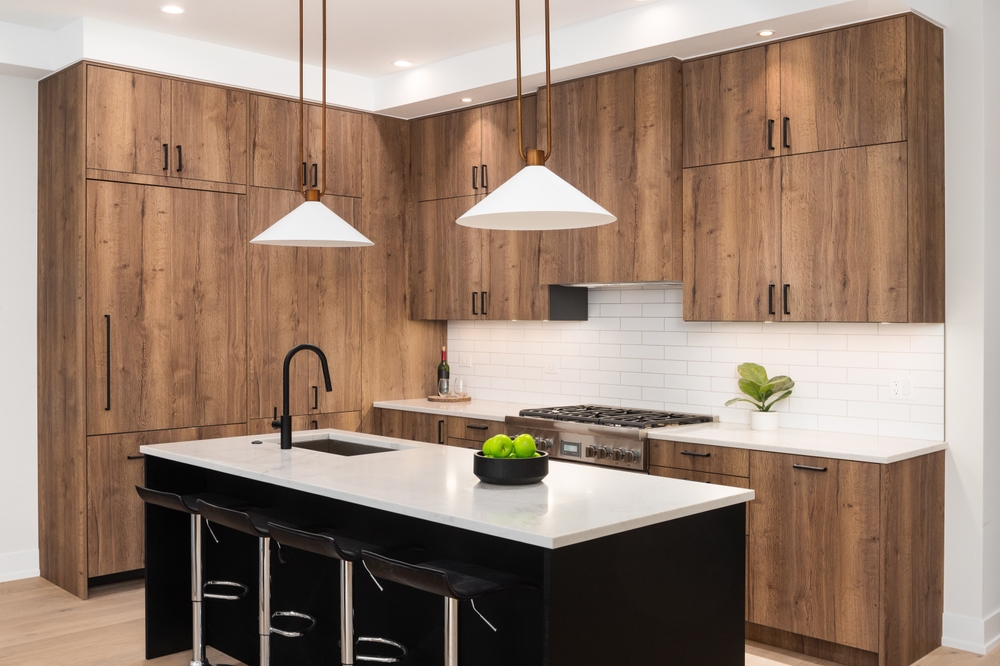
Wood veneer kitchen cabinets are cheaper than natural wood but have a similar appearance and come in a variety of styles and finishes to match your theme. A thin layer of wood veneer is often applied to less expensive materials like plywood or particle board to create the illusion of natural wood.
| Advantages | Disadvantages |
| Cost: Wood veneer is less expensive than traditional hardwoods like oak. | Peeling: The veneer can begin to chip or peel or over time which can spoil the look of your kitchen. |
| Lightweight: Wood veneer cabinets are lighter than heavy solid hardwoods, making them easy to manoeuvre and handle while putting less pressure on hinges and wall fixings. | Longevity: Wood veneer cabinets won’t last as long nor withstand as much wear and tear as solid hardwood. |
7. Laminated Kitchen Cabinets
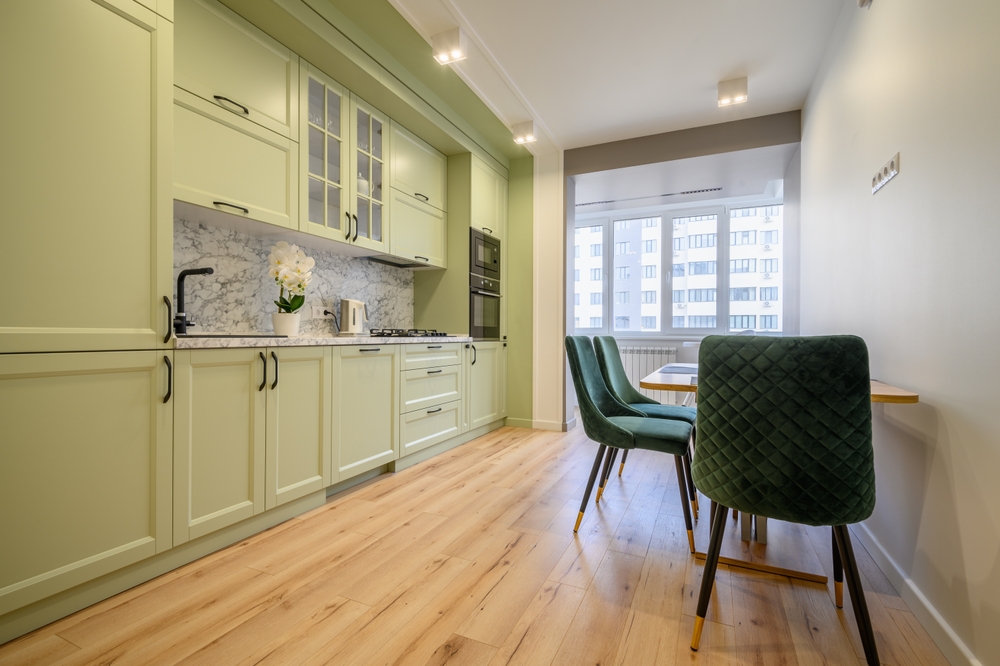
Cost-effective and with a range of design options, laminated kitchen cabinets are popular with those on a limited budget. Manufactured from layers of paper and plastic resin compressed together, there are pros and cons to using this synthetic material in your kitchen.
| Advantages | Disadvantages |
| Cheap to buy: Laminated cabinets are much cheaper than natural wood and ideal for tight budgets. | Maintenance: Once laminated cabinets become damaged, they can’t be repaired as other cabinet materials can be. Abrasive cleaners can also damage the finish |
| Strong: Durability is one of the main benefits of installing laminated kitchen cabinets. | Better options: Laminated cabinets generally don’t last as long as other cabinet options such as natural wood and plywood. |
| Versatile: Laminated cabinets are renowned for their vast design options and come in a myriad of colours and finishes to suit your theme. |
Now You Know What Kitchen Cabinets Are Made Of, Get in Touch Today
If you’re looking for more advice about kitchen cabinet materials or would like to discuss your next kitchen renovation project, contact us today. With over 30 years of traditional and contemporary kitchen design experience, we’ll help you build your dream kitchen.